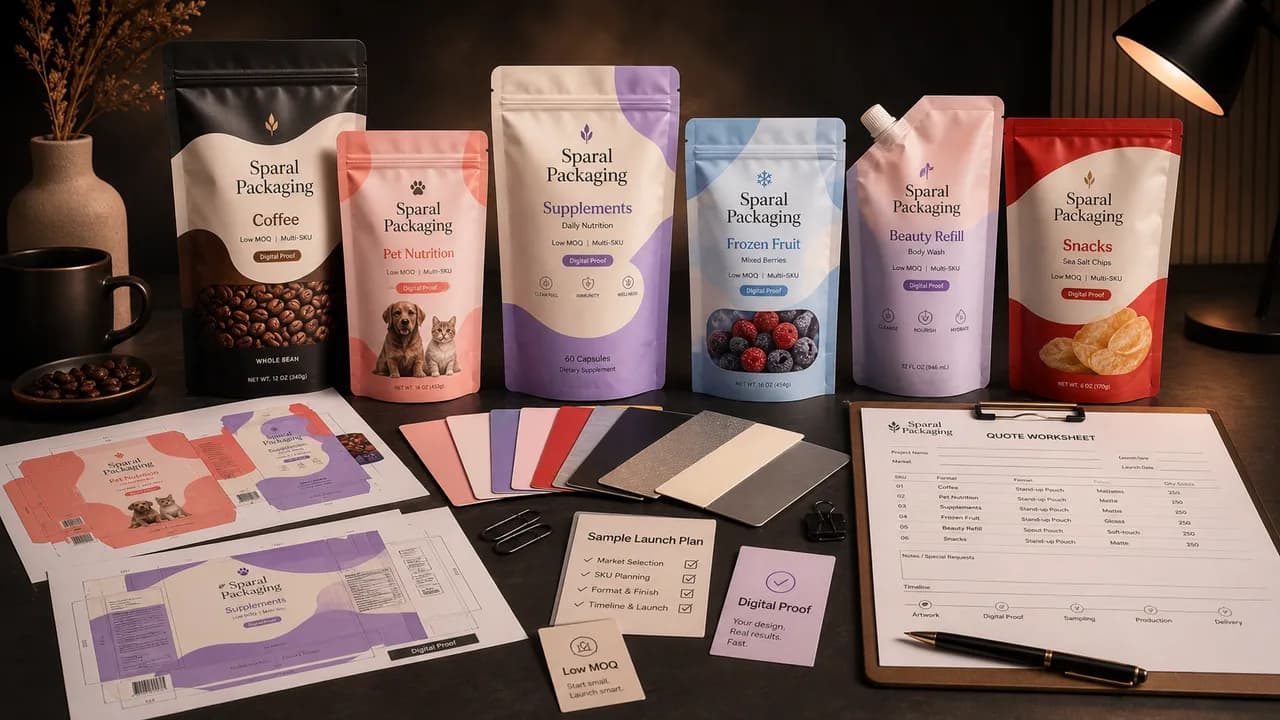
Fit
Match fill behavior, pouch stance, opening, dispensing, and channel.
Format decision system
Compare stand-up, flat-bottom, spout, clear-window, high-barrier, and coordinated SKU family structures before you quote.
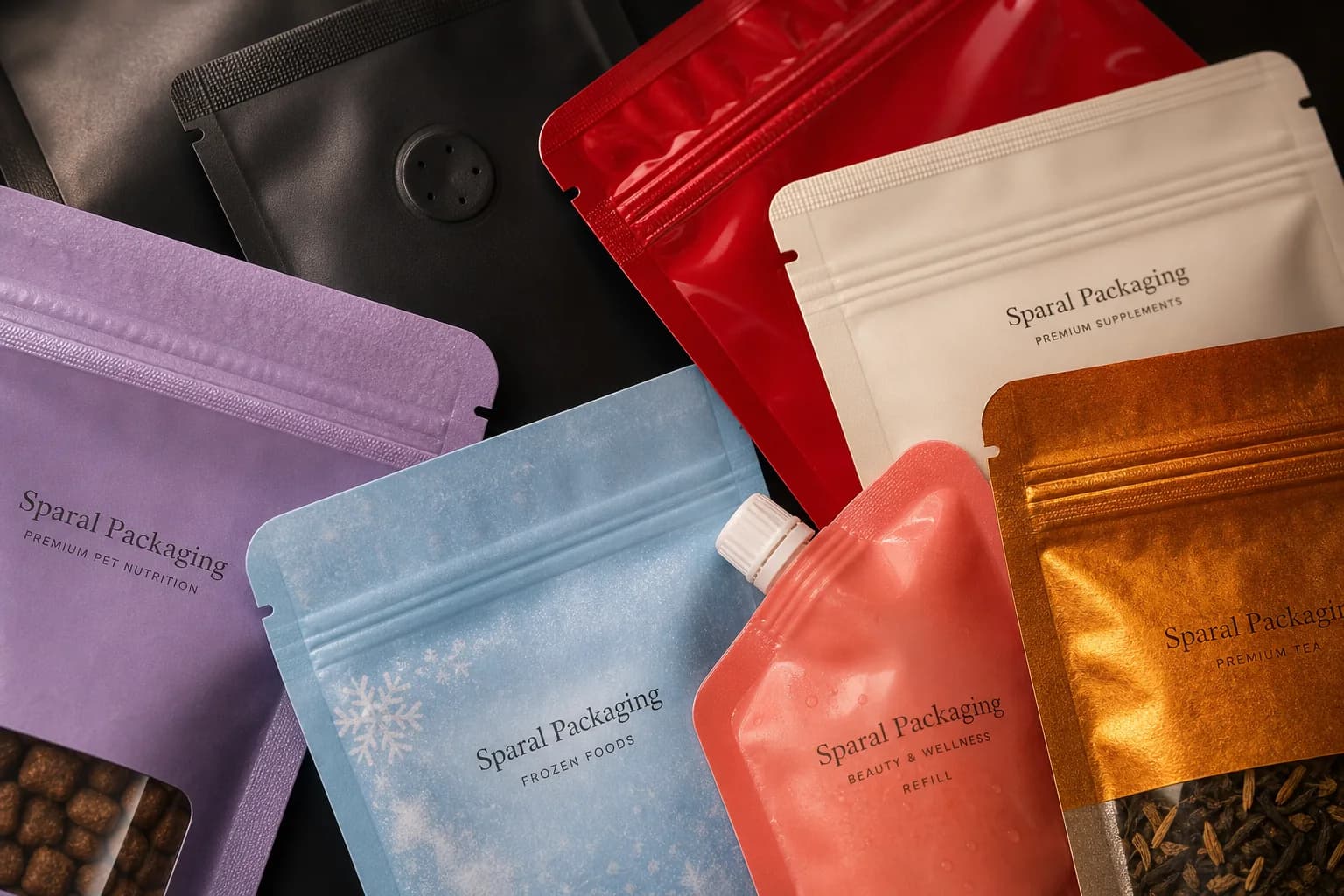
Format library
Each format card links to a deeper page with anatomy, quote fields, fit logic, and production watchouts.
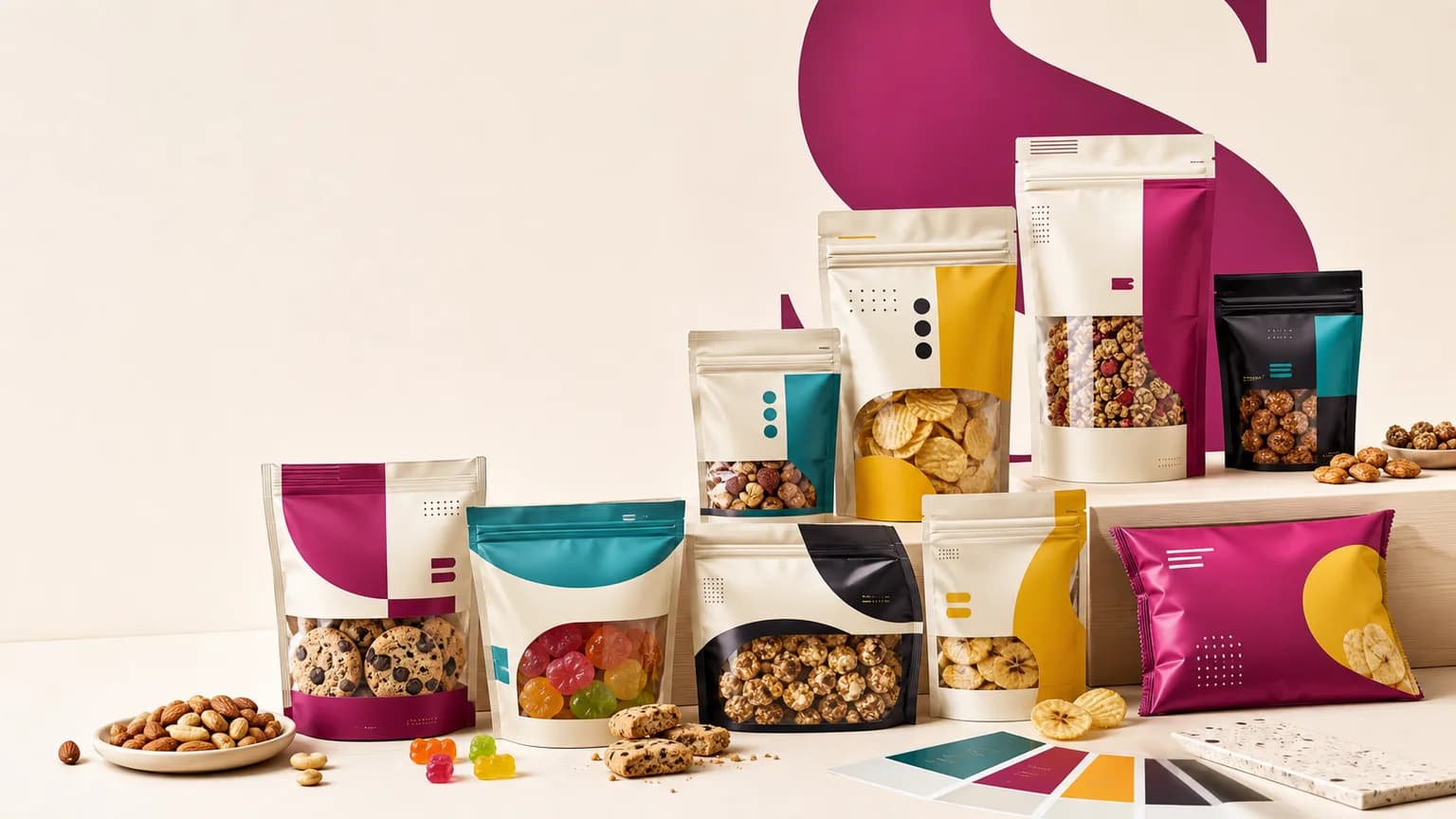
Zipper / bottom gusset / low MOQ
The flexible default for snacks, powders, candy, pet treats, and small-batch product tests.
Best for
Flexible first runs
Watch
Confirm fill volume and gusset depth.
Open format page

Box pouch / side panels / shelf block
A structured retail block for coffee, granola, pet nutrition, confectionery, and premium shelf programs.
Best for
Premium shelf presence
Watch
Plan base footprint and side-panel artwork.
Open format page

Spout / cap / refill / liquid
Refill and liquid packaging for beauty, personal care, household products, sauces, and sample programs.
Best for
Refill and dispensing
Watch
Check viscosity, spout placement, and cap style.
Open format page
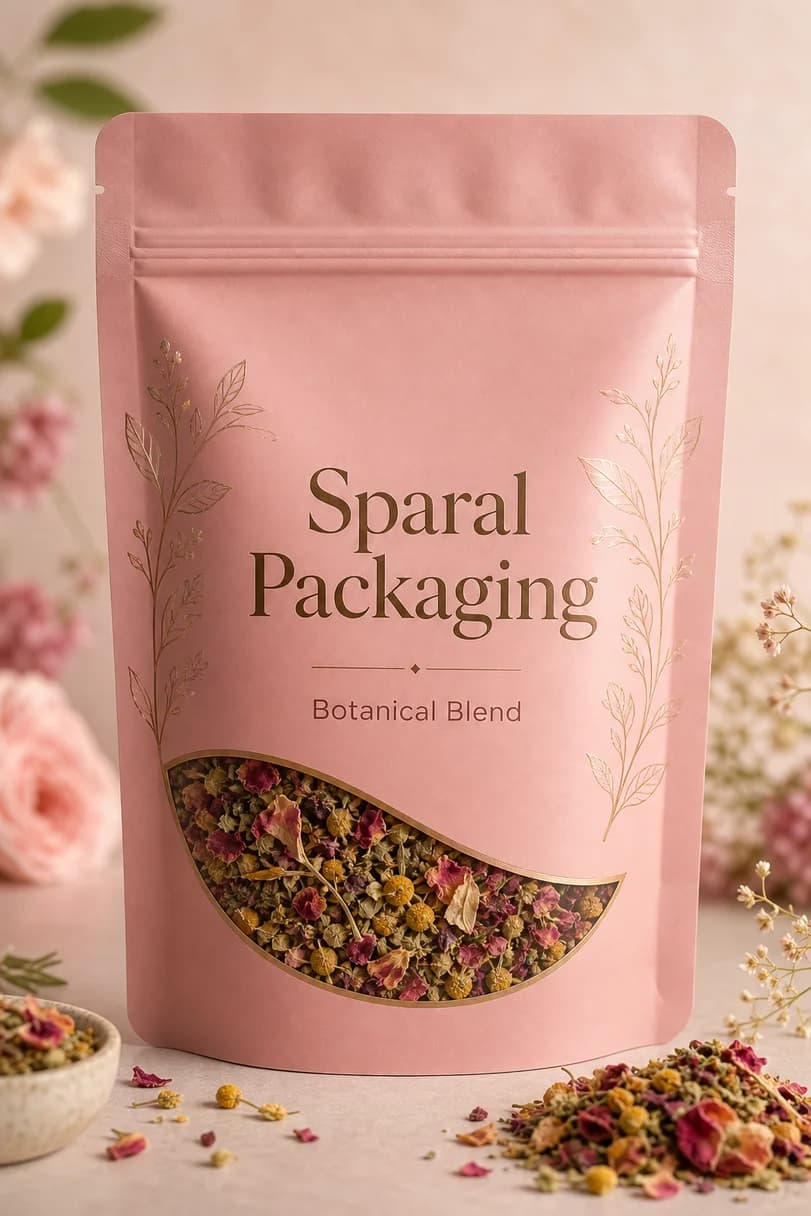
Window shape / visibility / trust
Show product texture and quality while keeping the artwork hierarchy controlled across SKU families.
Best for
Visible product trust
Watch
Balance window area with barrier needs.
Open format page
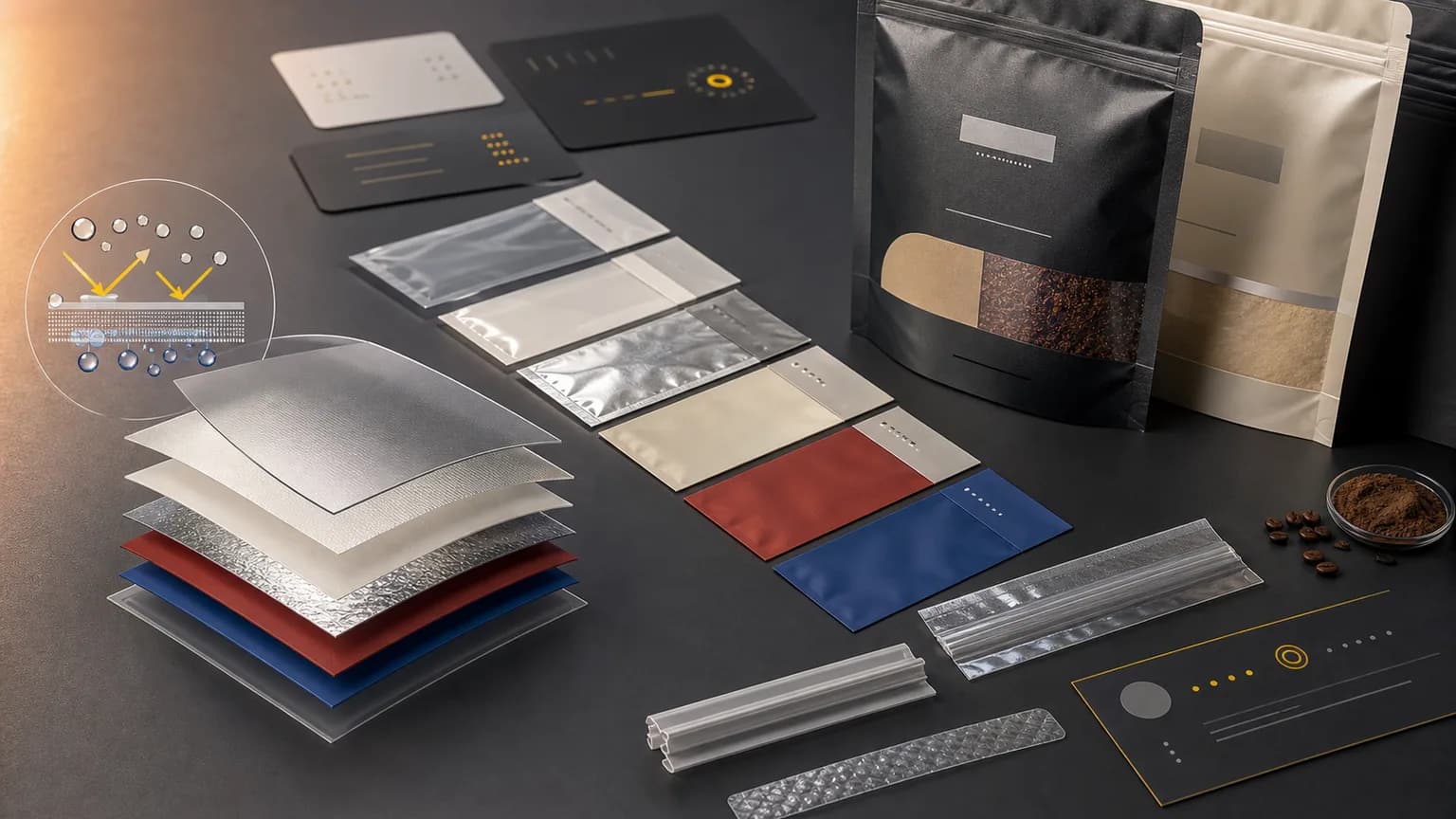
Oxygen / moisture / aroma / shelf life
Protection-first structures for coffee, powders, frozen foods, supplements, and aroma-sensitive products.
Best for
Freshness and protection
Watch
Start with product risk, not finish preference.
Open format page
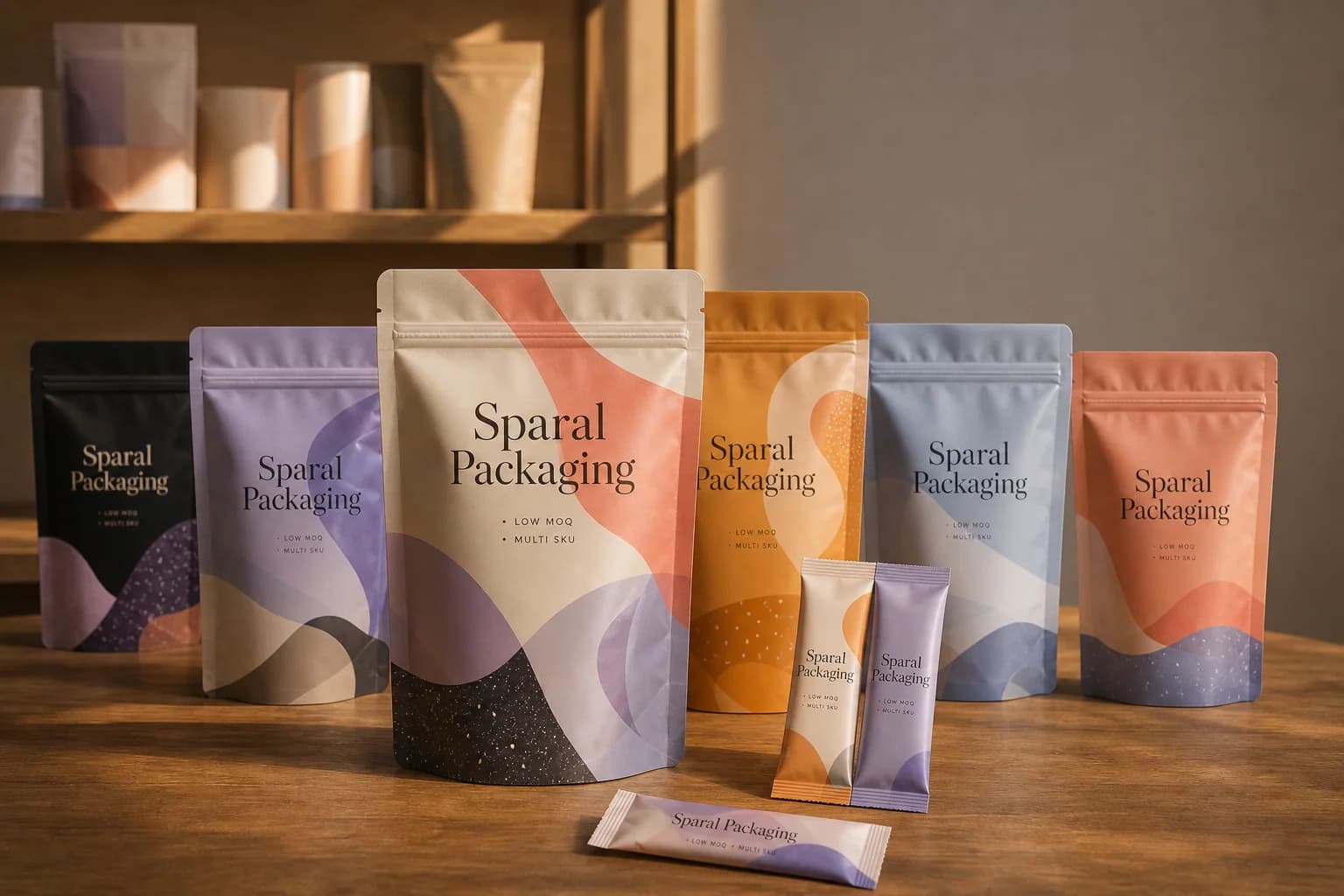
SKU map / variable panels / proof control
A format system for brands launching many flavors, markets, finishes, and variant rules at once.
Best for
Multi-variant launches
Watch
Define what can change before proofing.
Open format page
Buying table
The right pouch format depends on how the product fills, sells, ships, protects, and reorders.
Format flow
Match fill behavior, pouch stance, opening, dispensing, and channel.
Choose material around product risk before finish preference.
Quote with dimensions, artwork state, SKU count, and approval owner.
Material decisions
Materials are not decoration. Matte, gloss, windows, spouts, and barrier films each change trust, usability, protection, and quote complexity.
Matte
Premium, natural, wellness, specialty
Gloss
Snacks, candy, frozen, high-color launches
Clear window
Pet treats, granola, botanicals, candy, frozen pieces
Spout
Sauce, refill, gel, concentrate, liquid programs
High barrier
Coffee, powders, freeze-dried, oily snacks, shelf-life risk
01
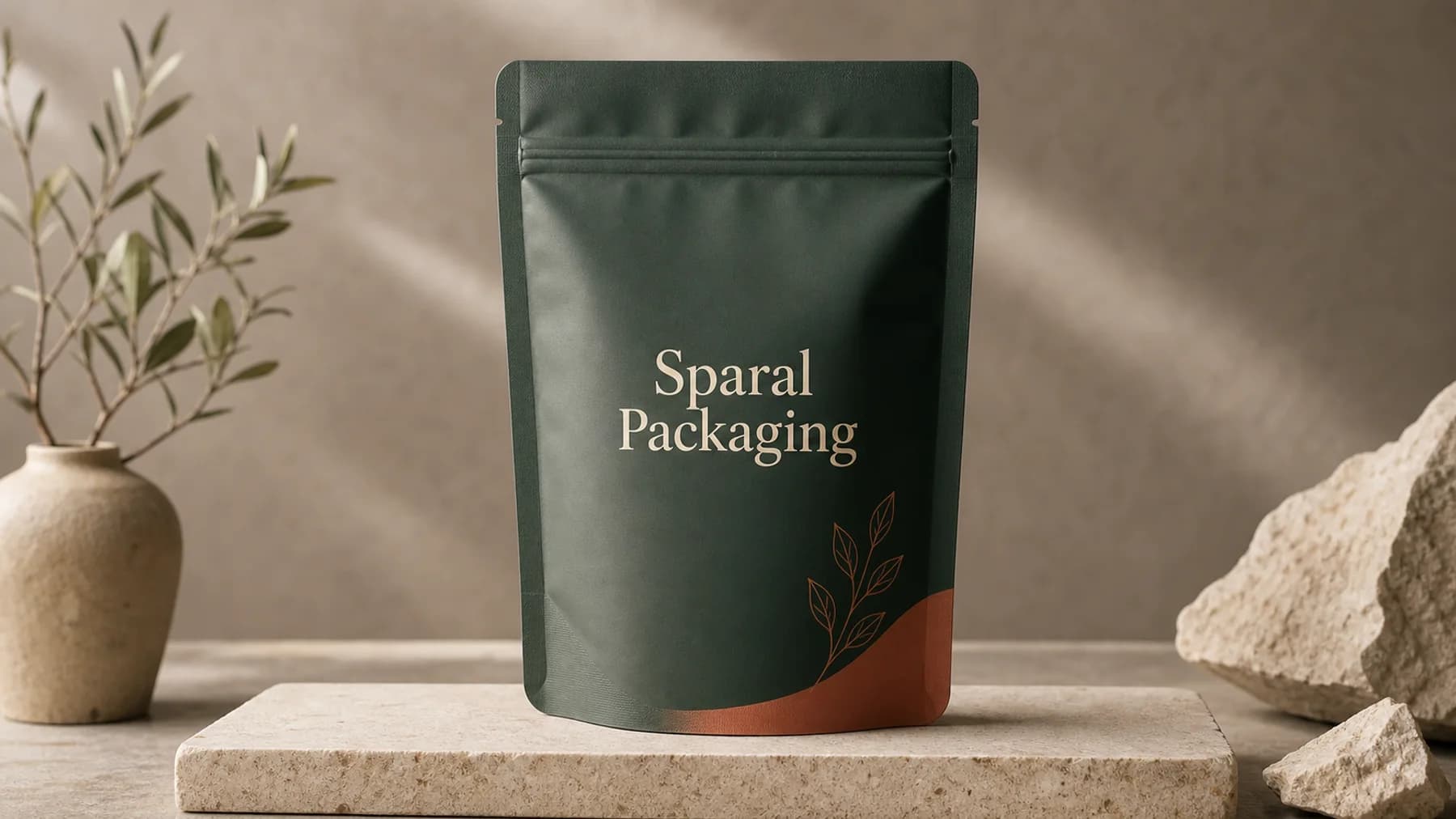
Use matte when premium restraint matters more than shine.
Matte and soft-touch laminates make specialty coffee, pet nutrition, wellness, and premium snacks feel quieter and more considered on shelf.
Best for
Premium, natural, wellness, specialty
Watch
Can mute saturated colors if artwork is built for gloss.
Quote input
Finish target, color proof tolerance, outer laminate preference
02
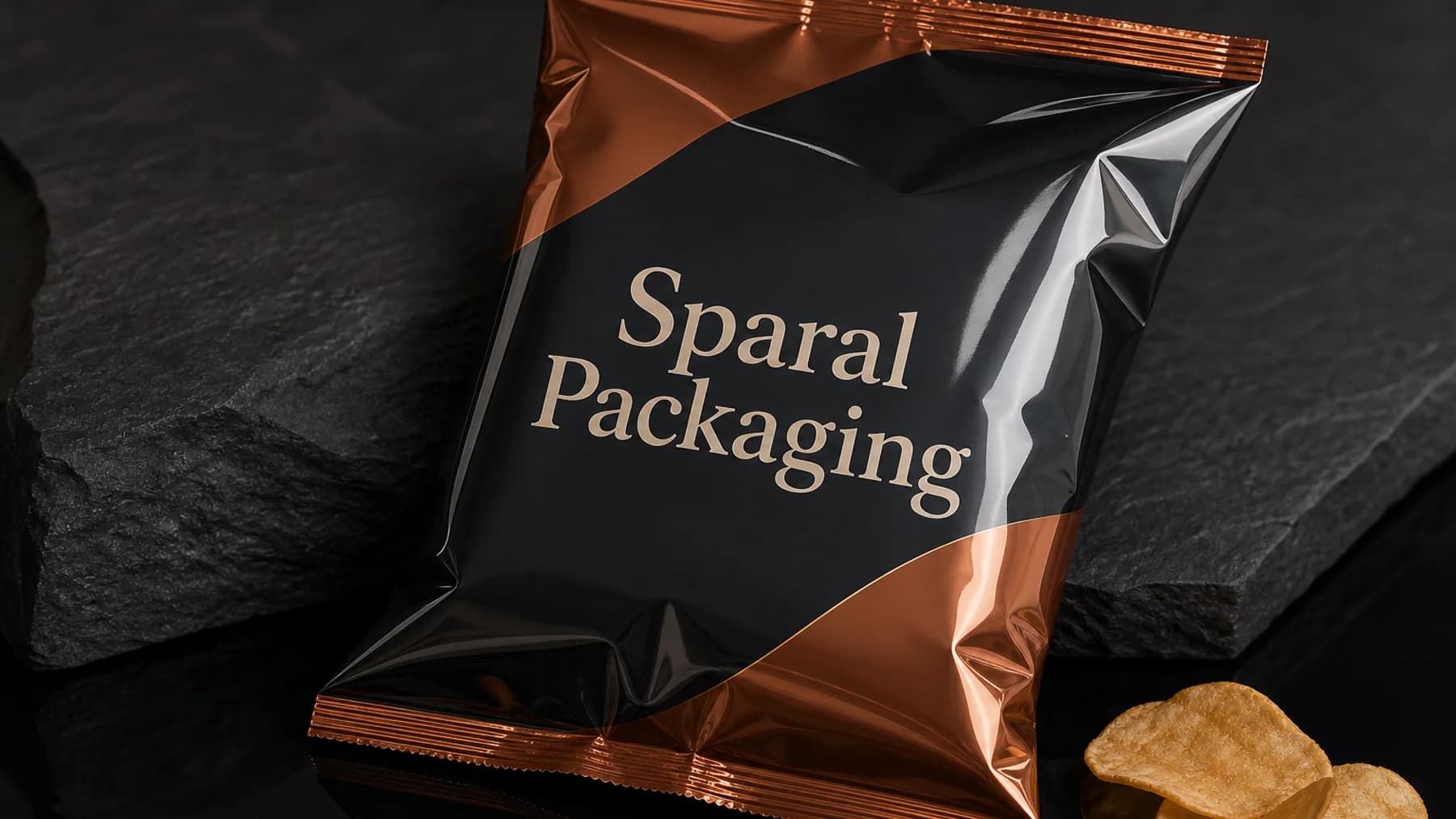
Use gloss when color impact and appetite appeal need to pop.
Gloss laminate is useful for high-energy snacks, candy, frozen products, and bold retail graphics where contrast and light reflection help the pack move faster.
Best for
Snacks, candy, frozen, high-color launches
Watch
Fingerprints and glare can fight minimalist premium systems.
Quote input
Color target, shelf lighting, scuff tolerance
03
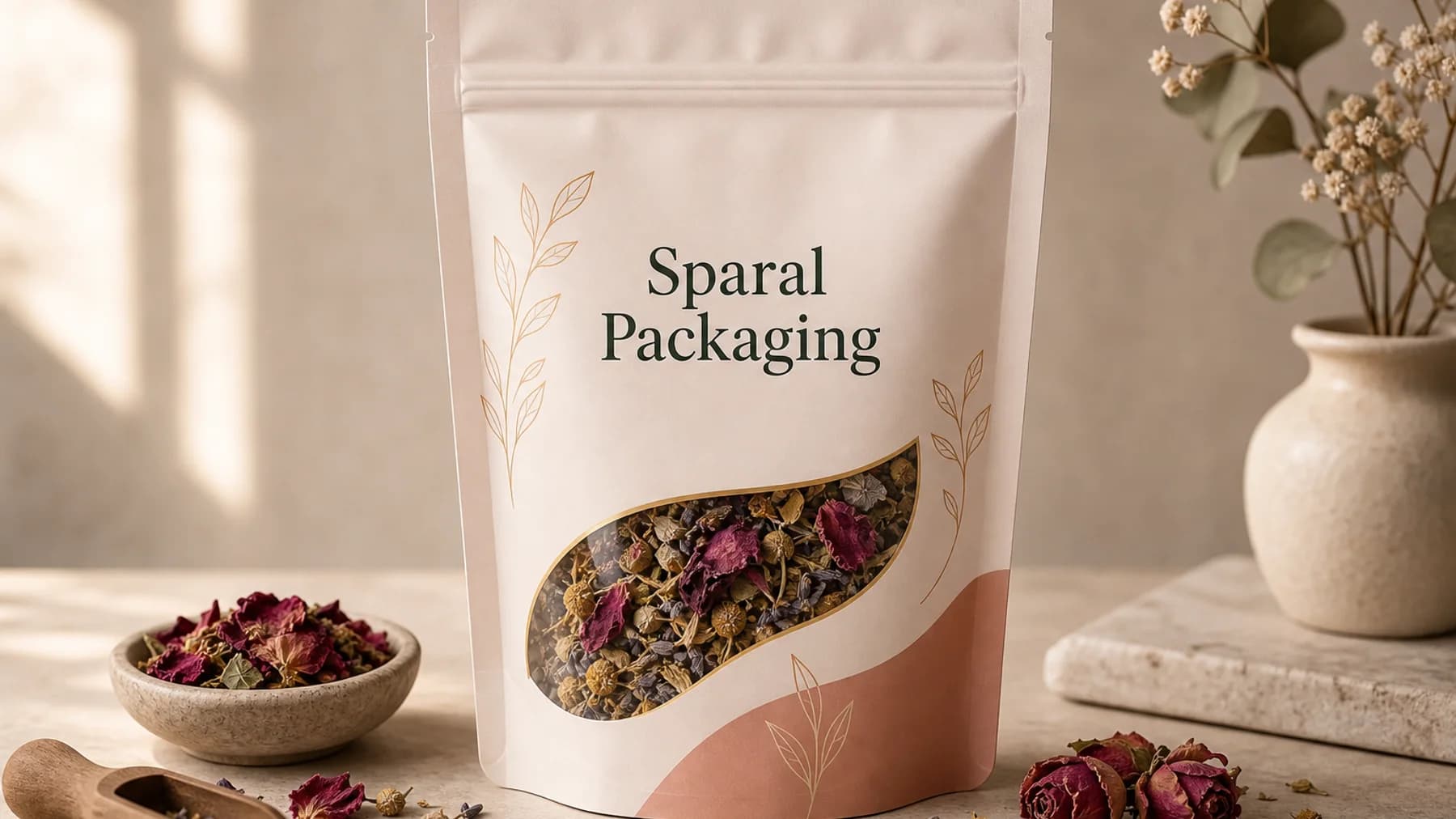
Use a window only when product visibility makes the sale easier.
A clear window can build trust for texture-heavy products, but it should be shaped and placed around barrier needs, front-panel hierarchy, and shelf-life risk.
Best for
Pet treats, granola, botanicals, candy, frozen pieces
Watch
Light exposure, oxygen needs, and weak front-panel branding.
Quote input
Window size, placement, product sensitivity
04
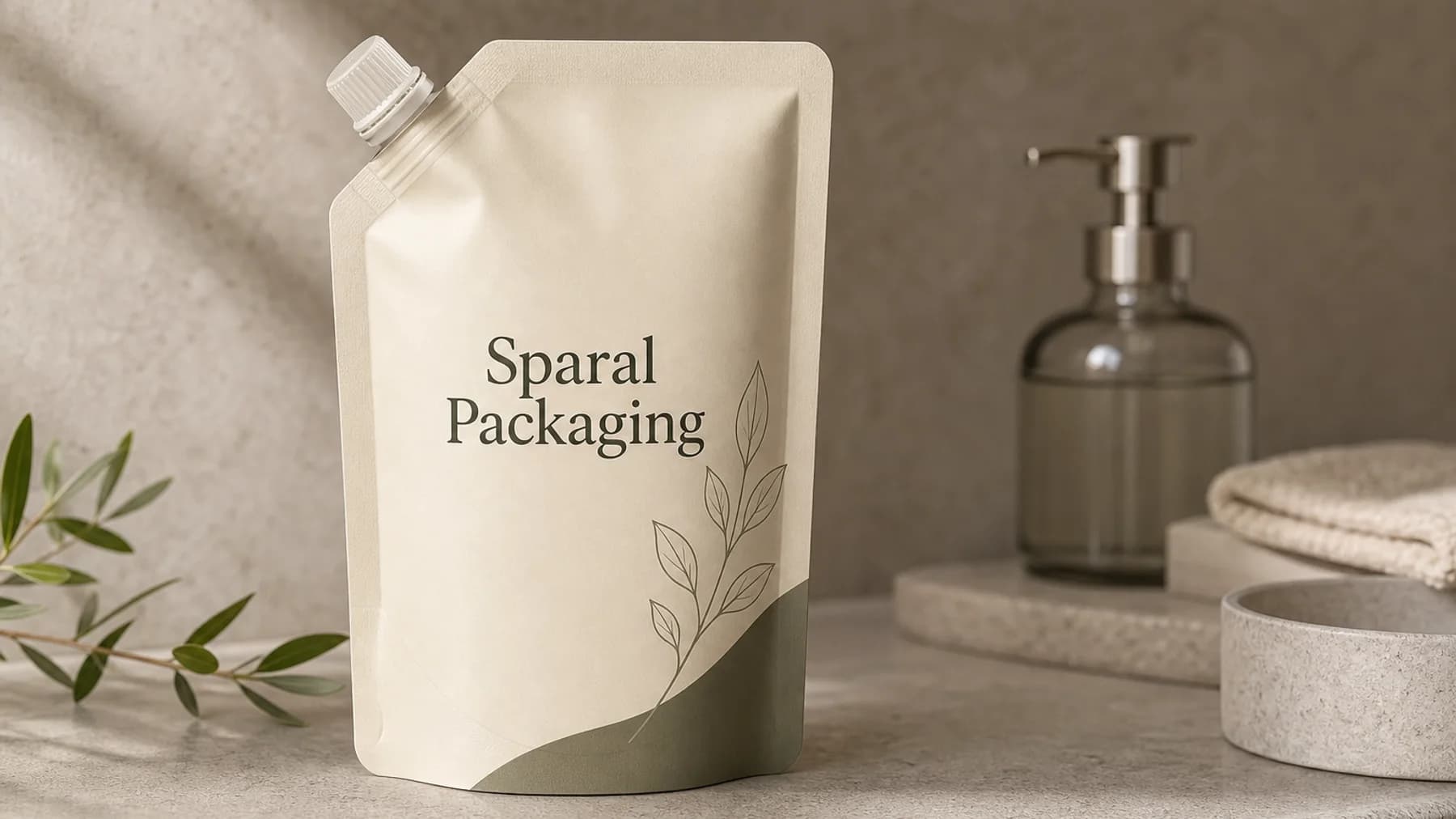
Use spouts when dispensing is the product experience.
Spout pouches fit sauces, refills, concentrates, beauty liquids, and household products when controlled pour, cap style, and fill behavior matter.
Best for
Sauce, refill, gel, concentrate, liquid programs
Watch
Cap size, fill temperature, viscosity, and child-safety needs.
Quote input
Spout corner, cap type, viscosity, fill volume
05
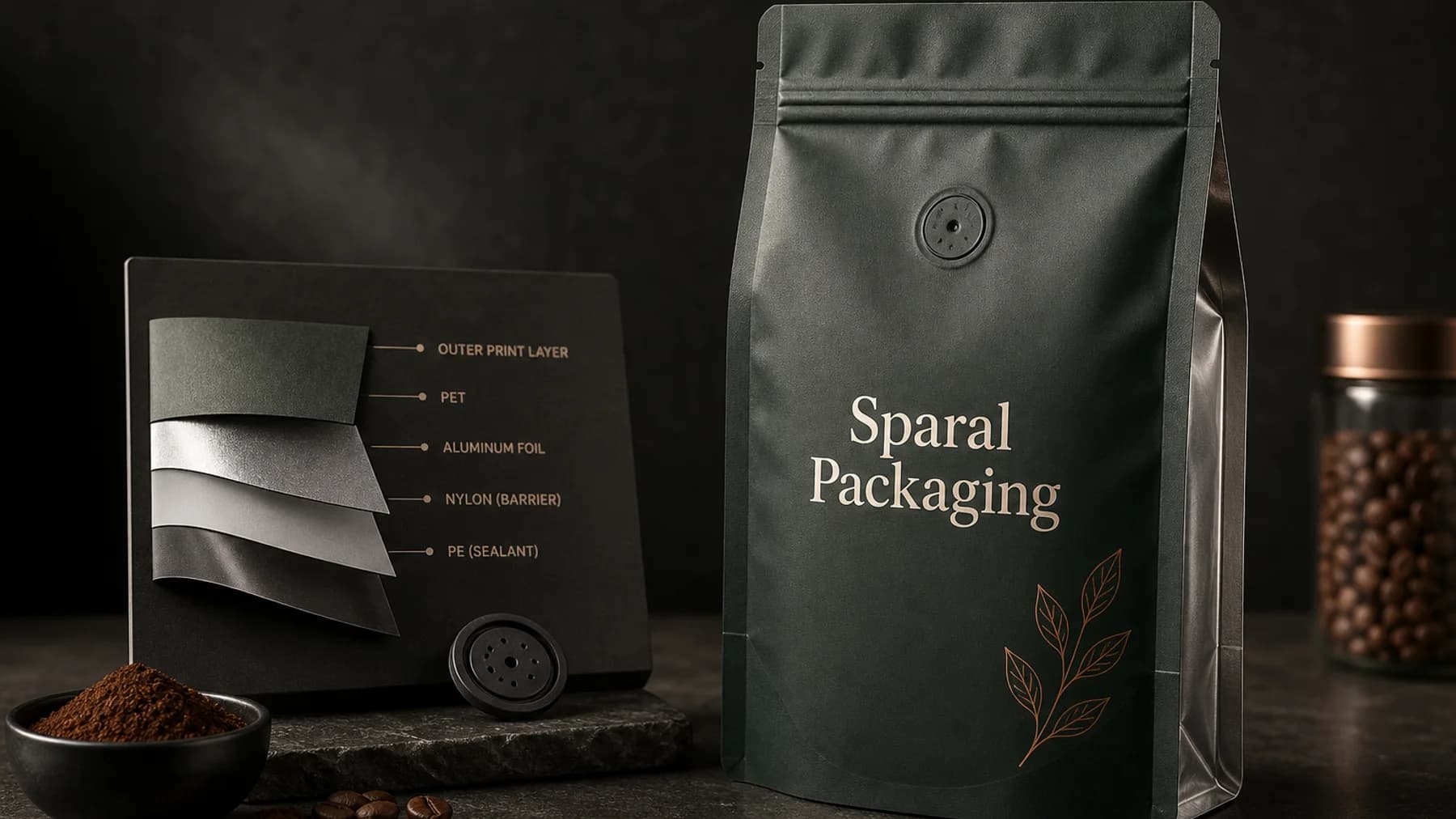
Use high barrier when freshness risk is real, not decorative.
Barrier structures protect aroma, oils, powders, coffee, freeze-dried products, and sensitive formulas where oxygen, moisture, or light can damage the product.
Best for
Coffee, powders, freeze-dried, oily snacks, shelf-life risk
Watch
Barrier choice should follow product testing and channel handling.
Quote input
Shelf life, oxygen/moisture risk, valve or foil preference
01 / Brief
1 of 6
Sparal turns product goals, SKU count, target market, artwork status, and launch timing into a quote-ready packaging brief before format decisions get locked.
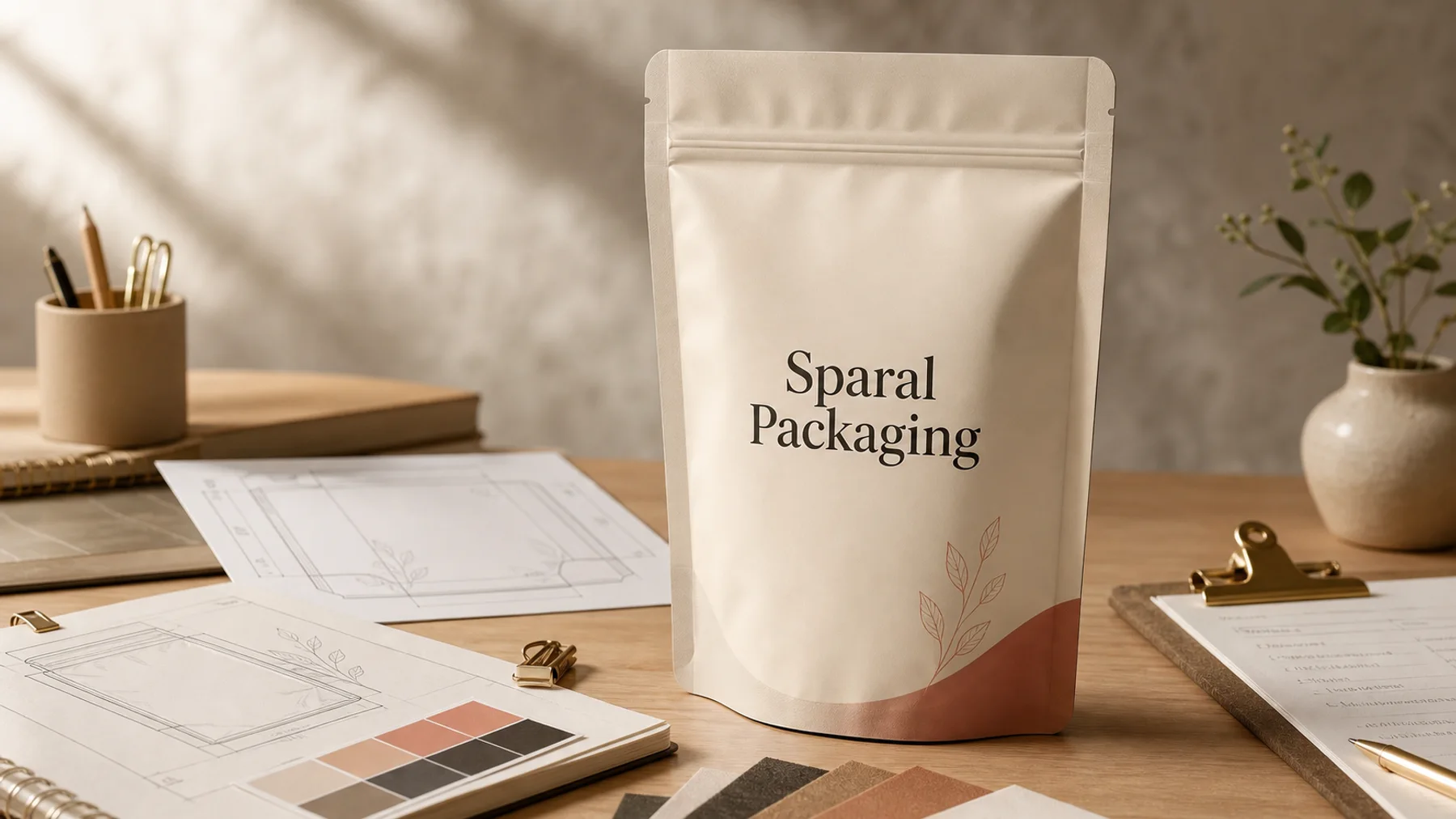
Quote starts clearer when product risk, channel, and launch date are visible together.
Input
Market, SKU map, target quantity
Risk
Artwork gaps and launch deadline
Output
Quote-ready decision brief
02 / Spec
2 of 6
Format, size, fill weight, finish, barrier, zipper, valve, window, and spout choices are mapped before proofing so every SKU has a reason to exist.
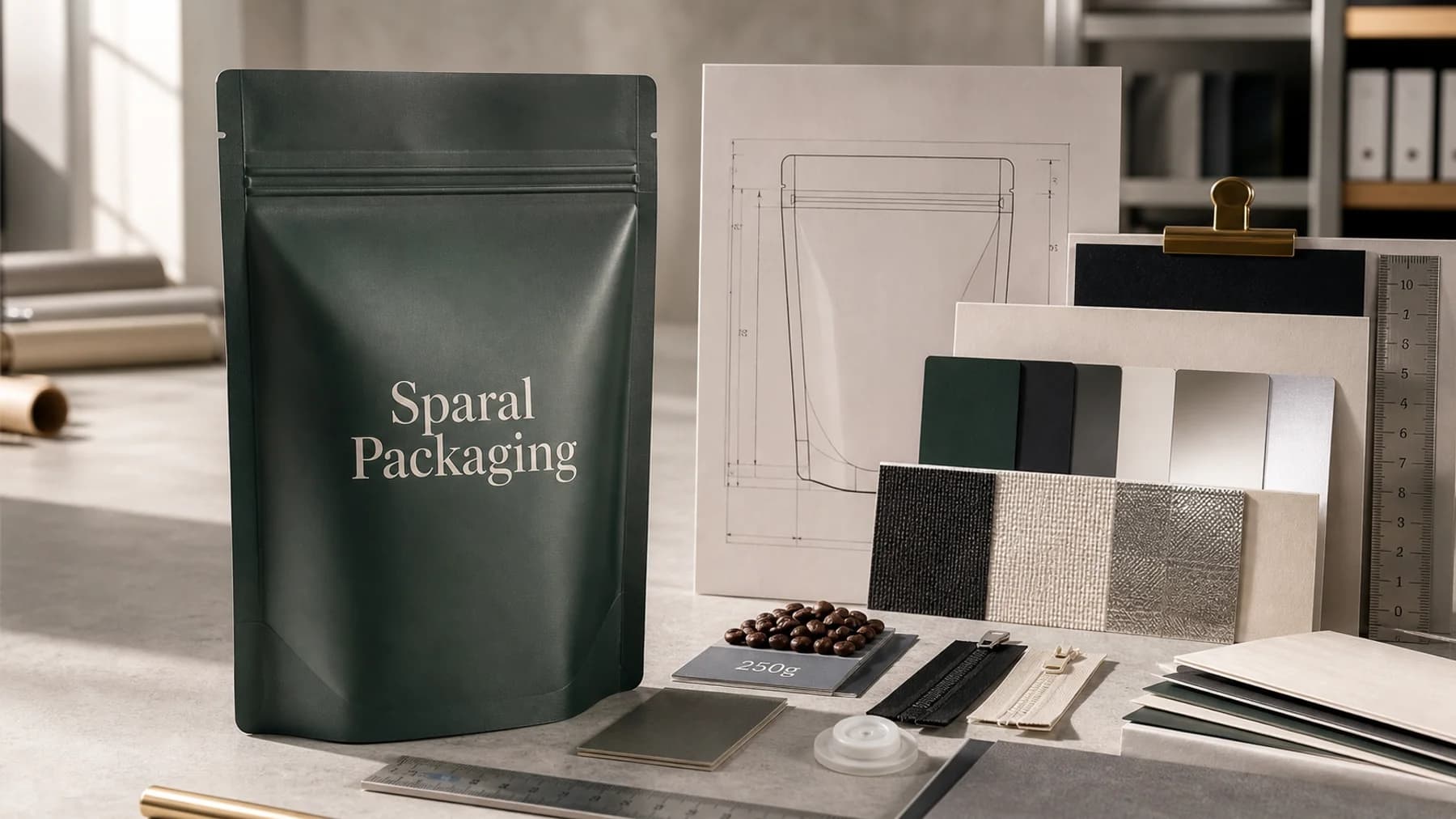
The best spec is specific enough to price, but flexible enough to improve before production.
Format
Stand-up, flat-bottom, spout
Material
Matte, gloss, window, barrier
Feature
Zipper, valve, spout, hang hole
03 / Proof
3 of 6
Digital proofing checks artwork, color intent, panel hierarchy, variant copy, barcode zones, and finish notes before the launch goes into production.
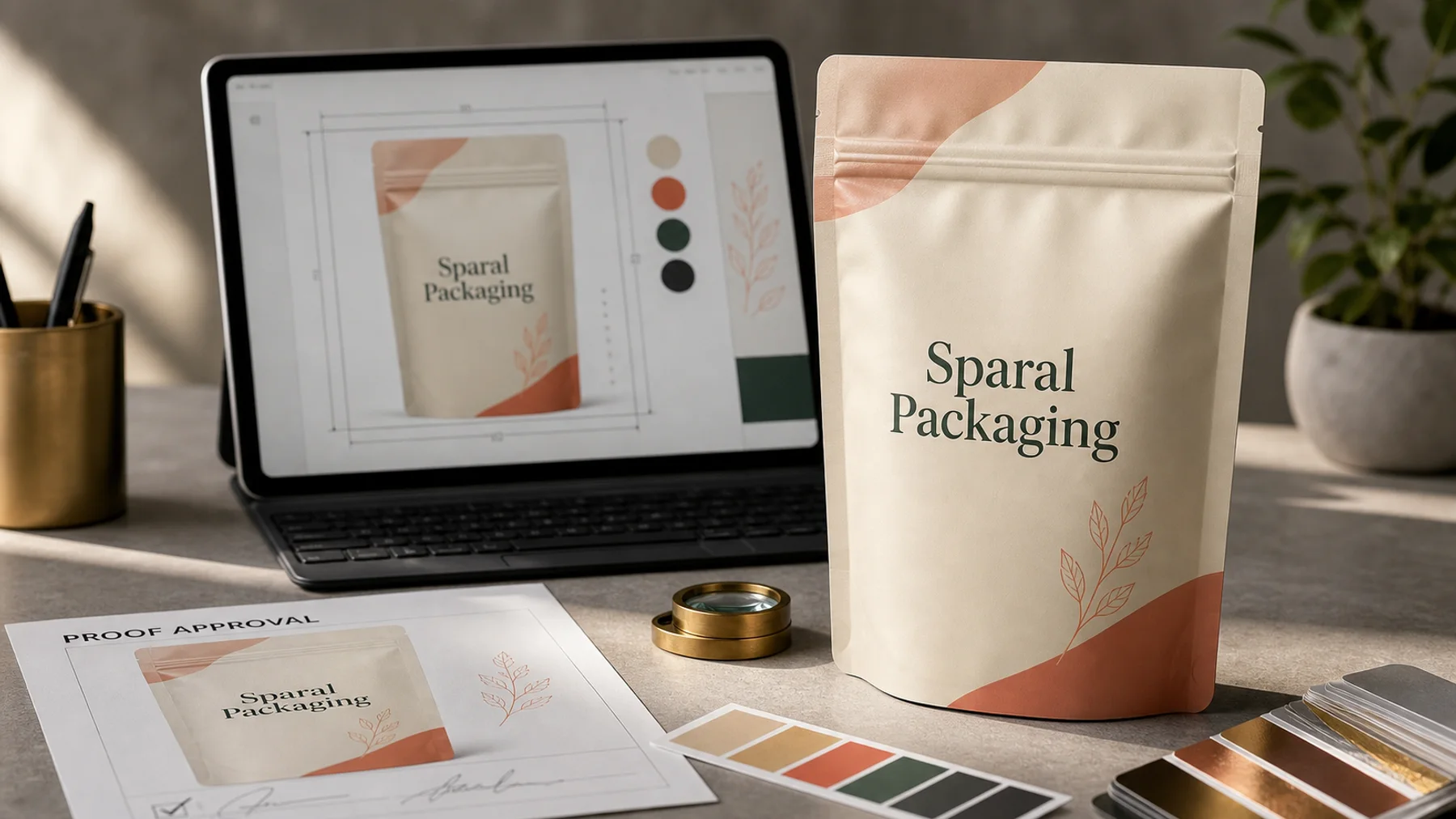
Proofing is where a packaging launch becomes operational, not just visually approved.
Artwork
Front, back, gusset, barcode
Variants
Flavor, claims, net weight
Approval
One owner signs off
04 / Production
4 of 6
Digital print, lamination, cutting, sealing, and quality checks are planned around the approved SKU map so small runs and variant families stay controlled.
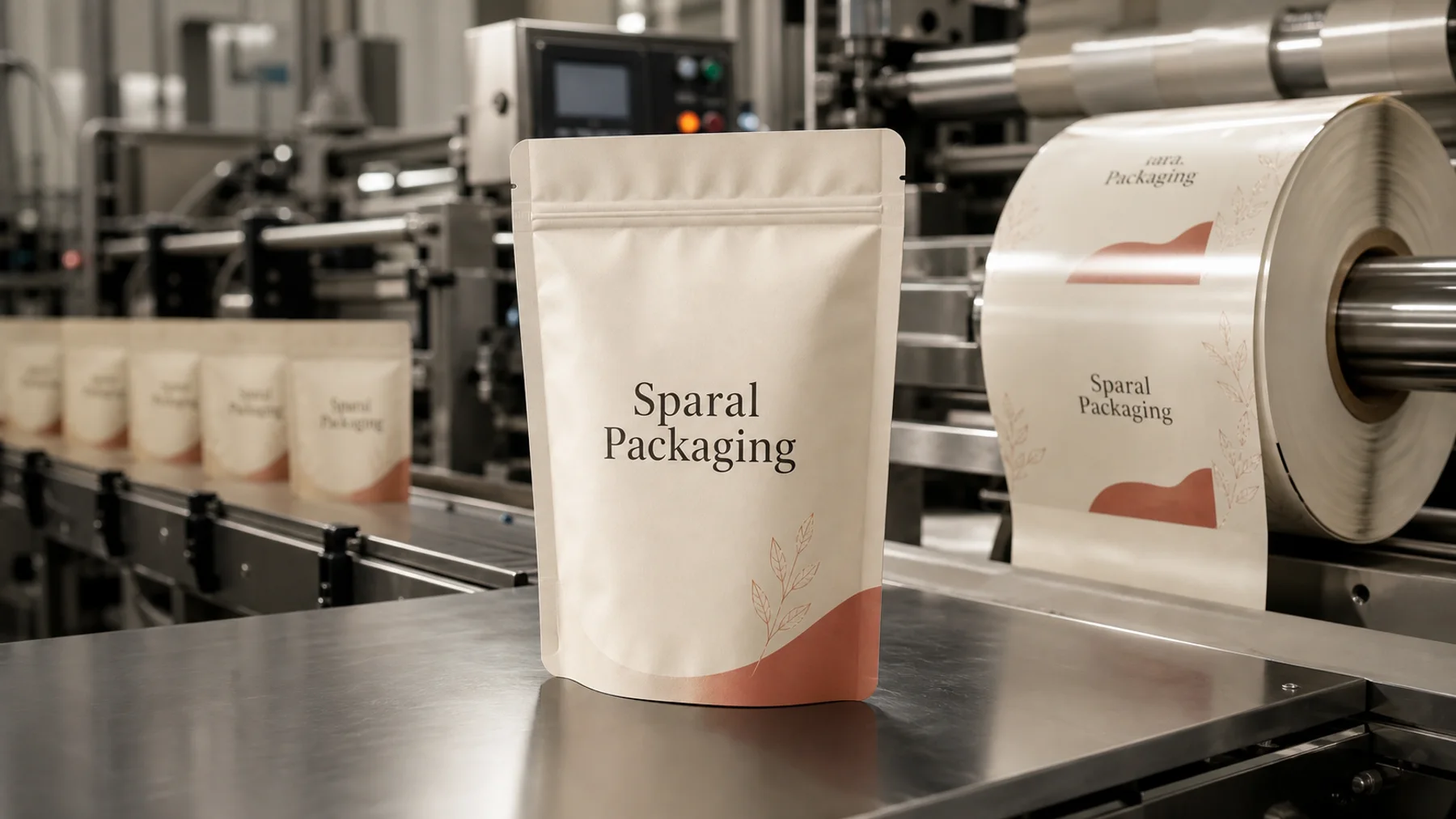
Production should protect launch learning, not force every SKU into mass-volume economics.
Full-color digital production
Convert
Laminate, cut, seal
QC
Finish, seal, copy, count
05 / Launch
5 of 6
Finished pouches ship as a launch family with enough structure for DTC, retail sampling, and market tests without burying cash in unproven inventory.
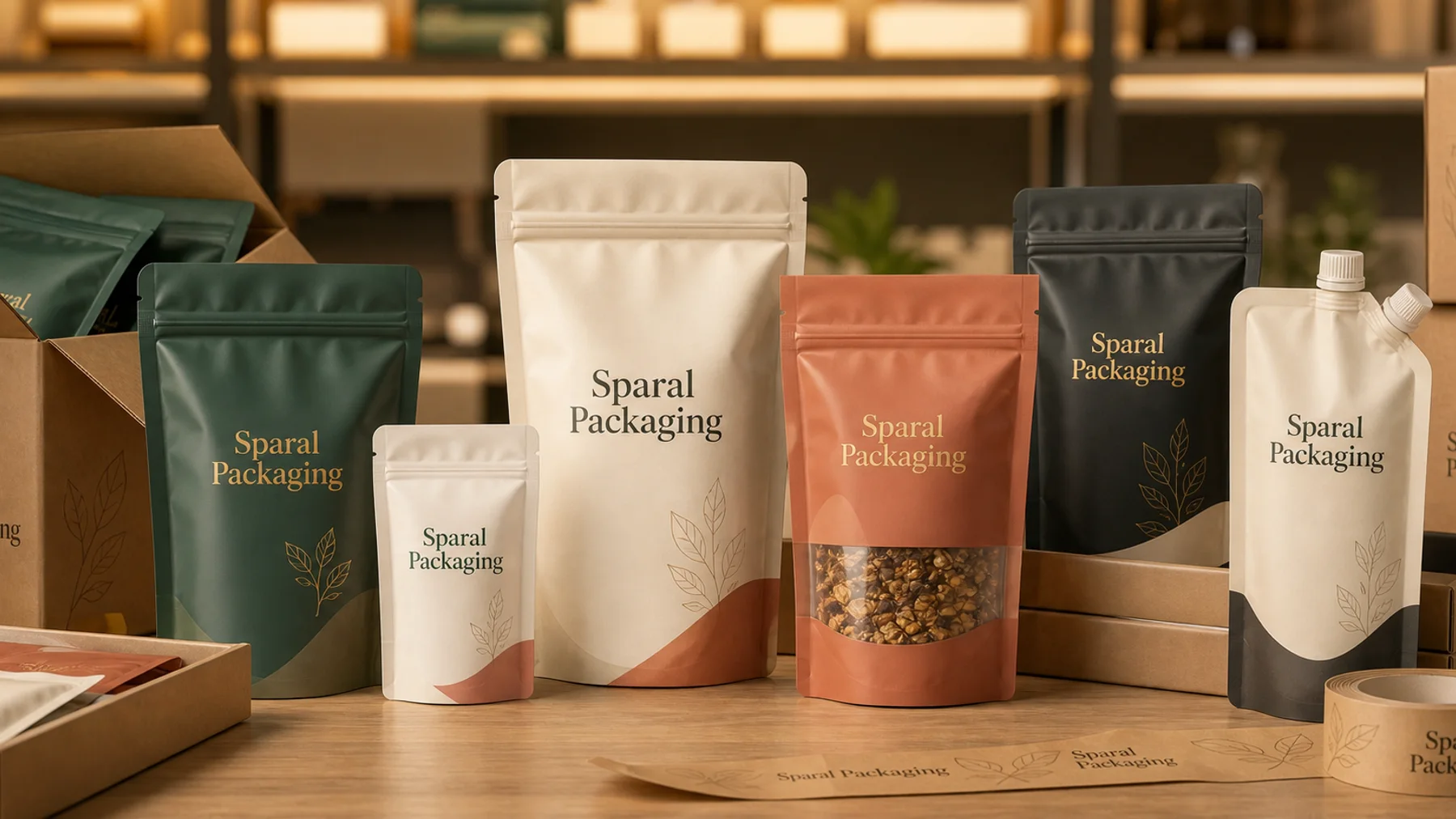
The launch pack should make the shelf easier to shop and the reorder decision easier to read.
Channel
Retail, DTC, sample kits
System
Shared brand rules by SKU
Readout
Which variants earn scale
06 / Reorder
6 of 6
Reorders use demand signals, lead-time planning, and version control so winning SKUs can scale while weaker variants stay out of the warehouse.
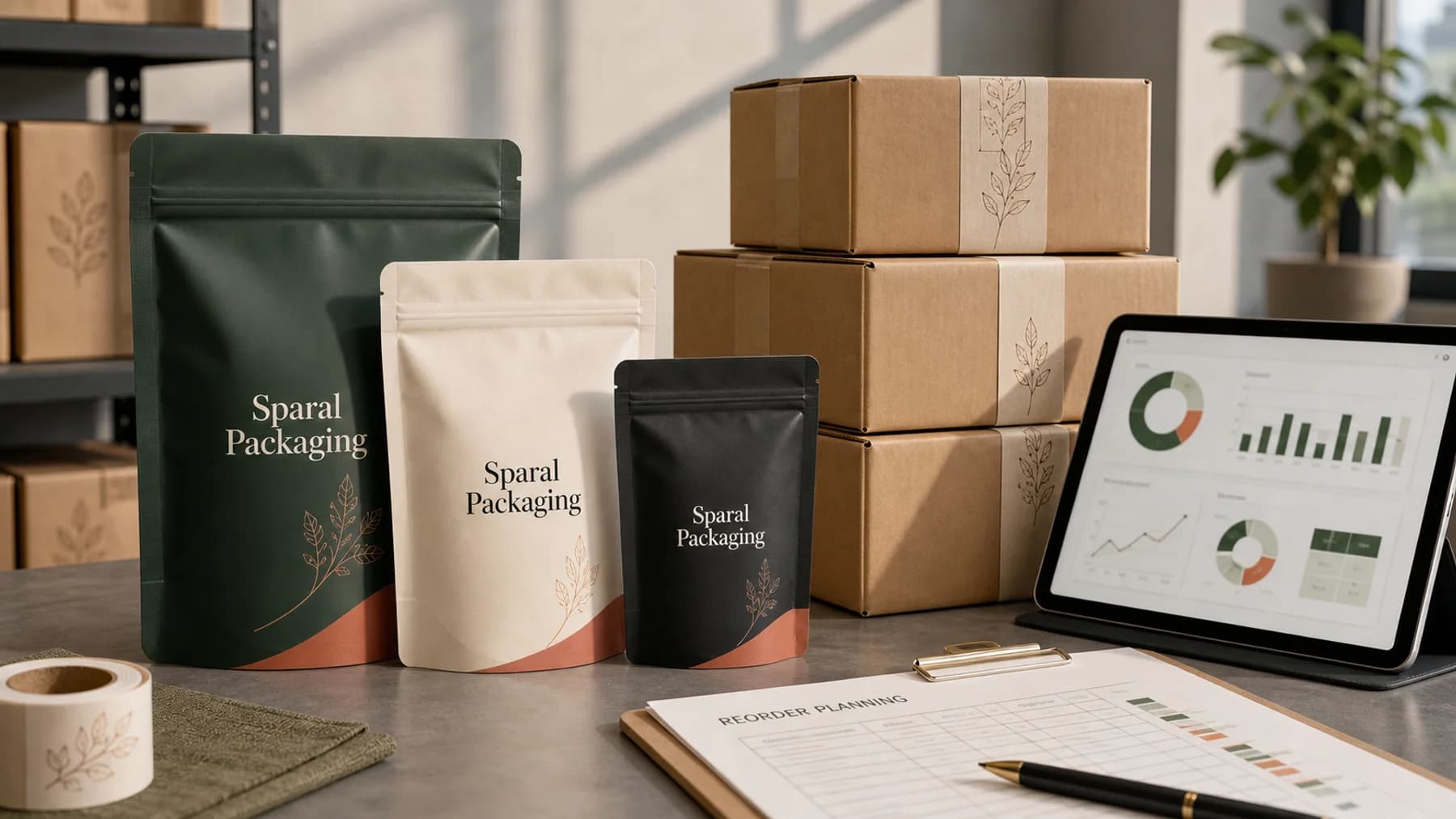
The second run should be smarter than the first, not just bigger.
Signal
Demand by SKU and channel
Control
Artwork version and lead time
Scale
Increase only proven formats
Quote planner
Turn product ideas into a packaging map: SKU count, pouch format, finish, quantity, proof timing, and production path.
Multi-SKU quote brief
Ready to build?
Send formats, quantities, artwork count, and target timeline. We will map the fastest low-risk path to proof and production.