Sparal

Category packaging guide

Dry goods packaging for low-MOQ multi-SKU launches.

Dry goods packaging planned around dry goods pouches planned around aroma, moisture, scoop behavior, and pantry shelf cues, with quote inputs for spices, baking mix, pasta, rice, soup mix, oatmeal, cereal, and noodles.

Dry goods packaging by Sparal Packaging

Custom packaging

Start a custom pouch order for this product.

Tell us what you are packing, how many SKUs you need, and where the product will be sold. Sparal can help turn dry goods packaging into custom pouch options, proof-ready artwork, and a quote you can act on.
Best fit

dry goods packaging

Use this option for brands that need custom printed flexible packaging with low minimums, premium shelf presence, and clear proof approval.

Send for pricing

Size, artwork, quantity, date.

Include SKU count, quantity per SKU, fill weight, format, finish, artwork status, target date. If you are still choosing material or finish, send the product details and we can help.

Order details

Choose what goes into production.

01

Start with the buying decision, not the pouch name.

dry goods packaging usually hides a more specific question: how can pantry and dry goods teams managing powders, grains, mixes, spices, and meals reach shelf, buyer samples, or DTC launch without overcommitting inventory? This guide makes that decision explicit before the quote request.

02

Make low MOQ operationally credible.

A low minimum only helps when the buyer can see how proofing, material choice, SKU count, finish, and reorder planning work together. Tie the commercial promise to concrete quote fields.

03

Use this guide to choose the next move.

From here, buyers can move into product examples, templates, tools, comparisons, and problem checks that make the packaging decision easier to price.

Quote checklist

What to send for a faster quote.

These fields help us recommend the right pouch, confirm production options, and price your project with fewer back-and-forth emails.

Audience

pantry and dry goods teams managing powders, grains, mixes, spices, and meals

Best formats

stand-up, flat-bottom, side-gusset, window, and high-barrier dry goods pouches

Material logic

moisture and aroma barrier films with finish and window choices

Launch fit

spices, baking mix, pasta, rice, soup mix, oatmeal, cereal, and noodles

Quote inputs

SKU count, quantity per SKU, fill weight, format, finish, artwork status, target date

Sparal angle

dry goods pouches planned around aroma, moisture, scoop behavior, and pantry shelf cues

Production details

Materials, proofing, and production.

See the options that affect shelf life, print quality, cost, proof timing, and how fast the order can move.

Material choices

Barrier and structure logic

Product behavior

dry goods pouches planned around aroma, moisture, scoop behavior, and pantry shelf cues

Material choice should start with what can fail in storage, shipping, first opening, or repeat use.

Primary film direction

moisture and aroma barrier films with finish and window choices

The first quote should name the assumed film direction so suppliers are not guessing from artwork alone.

Aroma and oxygen

Use aroma/oxygen barrier language and confirm whether valve, tin tie, or zipper is needed.

Coffee, tea, and spice buyers judge quality by aroma at first open and after storage.

Panel and finish

Reserve front-panel hierarchy for origin, roast, flavor, or blend while keeping barcode and date-code areas stable.

Multi-SKU beverage systems need repeatable information architecture, not only pretty artwork.

Proof requirement

Review dieline, barcode, finish, material notes, and every SKU variant before production approval.

Useful planning guides should teach the buyer how production mistakes are prevented.

Production checkpoints

What gets reviewed before scale

Brief

Capture spices, baking mix, pasta, rice, soup mix, oatmeal, cereal, and noodles channel, SKU count, target quantity, product behavior, and the reason stand-up, flat-bottom, side-gusset, window, and high-barrier dry goods pouches is being considered.

Dieline

Confirm panel layout, seal zones, gusset, zipper/spout/window placement, barcode area, bleed, and copy ownership before artwork is finalized.

Powder handling

For powders, validate fill dust, zipper contamination, scoop access, headspace, and moisture-risk assumptions.

Digital proof

Review color, copy, SKU names, claims, barcode, finish, material notes, and approval owner for every variant.

Production QC

Check print alignment, seal areas, closure behavior, case-pack scuffing, and whether the sample still works at real fill weight.

Reorder

After launch, compare sell-through by SKU against lead time and set reorder points before winners stock out.

Quote fields

Inputs that make pricing usable

SKU count and variants

Shows whether the buyer is ordering one hero SKU, a flavor family, retail samples, or seasonal versions.

Quantity per SKU

Prevents total-order minimums from hiding the real per-SKU inventory risk.

Fill weight or fill volume

Drives pouch size, gusset, headspace, case pack, and shipping assumptions.

Format and features

Names stand-up, flat-bottom, spout, window, zipper, valve, hang hole, or tear notch requirements.

Material and barrier goal

Connects the quote to oxygen, moisture, aroma, oils, freezer, liquid, or sustainability needs.

Artwork and dieline status

Shows whether the project is ready for proofing or still needs production art cleanup.

Target proof and launch date

Lets the supplier plan proof, production, QC, shipping, and reorder timing.

Powder flow and scoop behavior

Moisture, headspace, zipper contamination, and mouth width can change the usable pouch.

Why it works

Built for real product launches.

01

Guides a broad buying decision with a clear purchase path.

02

Connects the main packaging need to quote-ready decisions.

03

Points buyers to the specific product and risk details they need next.

FAQ

Questions before you order.

01

What should I include in a dry goods packaging quote?

Include SKU count, quantity per SKU, dimensions or fill weight, material needs, finish, artwork status, features, launch timing, and delivery target.

02

Can low-MOQ packaging still look premium?

Yes. Digital print can support full-print color, matte or gloss finishes, windows, zippers, valves, and spouts without traditional plate-fee setup.

03

When should I scale beyond the first run?

Scale after sell-through, buyer feedback, reorder timing, and SKU winners are clear enough to justify higher inventory.

Ready to build?

More SKUs. Lower risk. Stronger brands.

Send formats, quantities, artwork count, and target timeline. We will map the fastest low-risk path to proof and production.

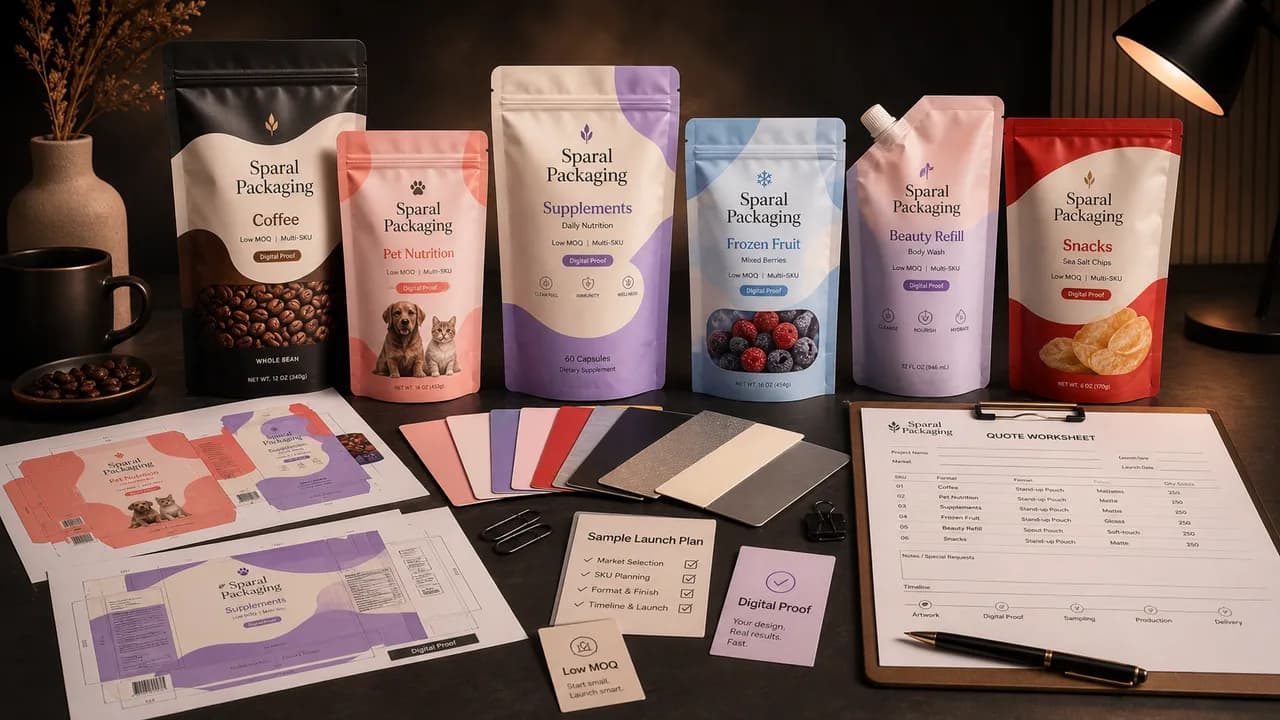
Sparal Packaging shipment and market-ready custom pouch cases